
Introduction: Why I Had to Learn the Difference Myself
When I first started my digital journey, I used the terms “content marketing” and “blogging” interchangeably. But I quickly realized I was missing out on powerful strategies by doing so. Understanding what is the difference between content marketing and blogging for beginners changed everything for me. In this post, I’ll walk you through what I’ve learned, what sets them apart, and how you can use both together to grow your business smarter—not harder.
Content Marketing vs Blogging: Two Similar but Very Different Worlds
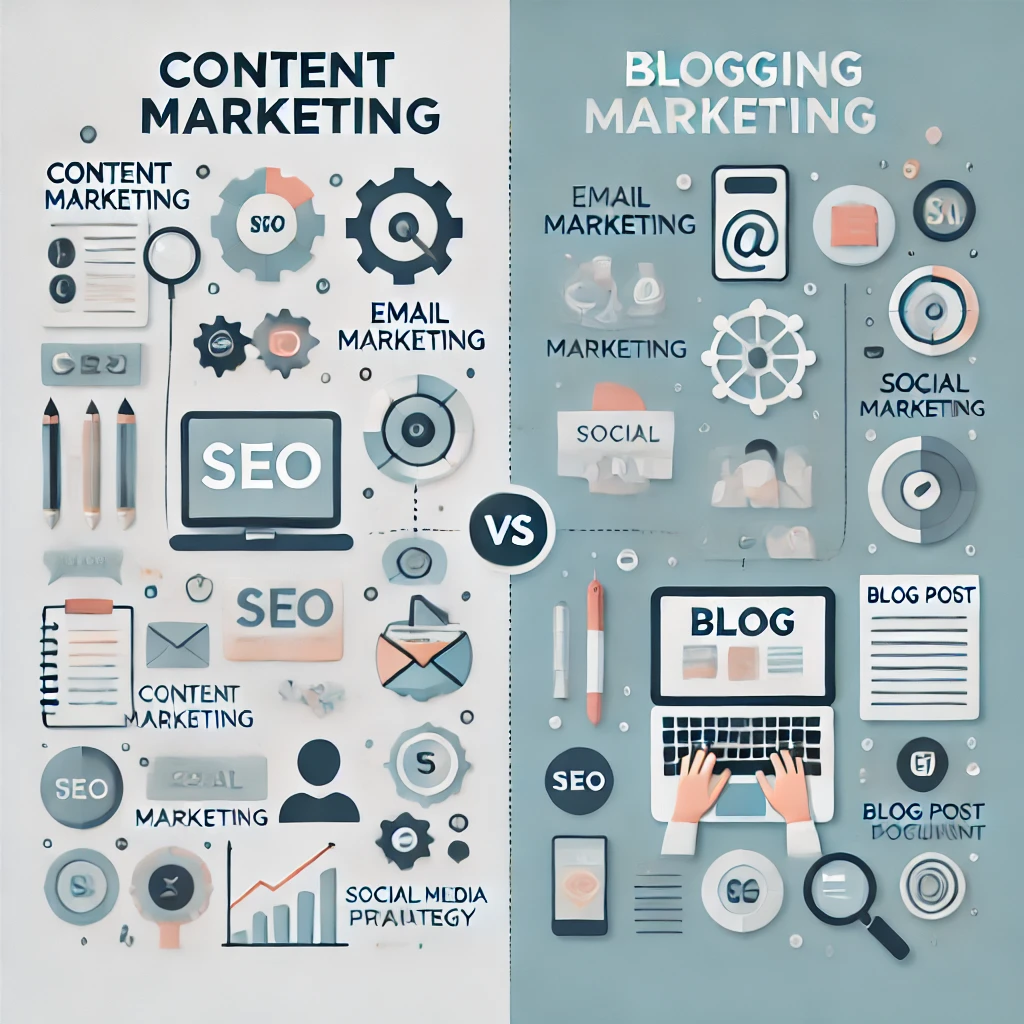
To understand what is the difference between content marketing and blogging for beginners, let’s start with definitions. Blogging is the act of publishing written posts, typically on a website, to share ideas, updates, or personal experiences. It’s a content format. On the other hand, content marketing is a strategy. It involves using various types of content—blogs, videos, infographics, podcasts, and more—to attract, engage, and convert an audience.
While every blog post can be a piece of content marketing, not all blog posts are created with strategic intent. That’s the real distinction. If you’re just publishing weekly posts without a plan, you’re blogging. But if each post ties into a customer journey, supports your product, and leads readers down a funnel—you’re doing content marketing.
Purpose and Goals: Why It Matters for Beginners
I struggled for months trying to grow my blog until I understood what is the difference between content marketing and blogging for beginners from a goals perspective. Blogging often starts with the goal of expressing opinions or documenting personal stories. It builds community and voice. Content marketing, however, is goal-oriented—usually focused on increasing leads, sales, or brand authority.
For instance, a beginner food blogger might post recipes without thinking of long-term strategy. But a content marketer in the food niche will write posts like “5 Meal Prep Recipes That Save $100/Week,” linking to affiliate tools or meal plans. That subtle difference can make or break monetization efforts.
Formats and Distribution Channels: More Than Just Writing
Another crucial point in understanding what is the difference between content marketing and blogging for beginners is the variety of formats and channels used. Blogging typically focuses on articles or written content published on a single website. Content marketing expands far beyond that.
As a beginner, I only wrote blog posts. But once I shifted my mindset to content marketing, I repurposed those posts into email newsletters, Instagram carousels, Pinterest pins, YouTube summaries, and lead magnets. This expanded my reach without doubling my workload. Remember, blogging is one tool in the box—content marketing is the entire strategy that puts those tools to work.
Audience Intent: Serving vs Converting
Many new bloggers forget to ask: “Who am I writing this for?” That’s where the true essence of what is the difference between content marketing and blogging for beginners lies. Blogging can be casual, diary-like, or aimed at hobbyists. Content marketing always considers audience intent—where they are in the funnel and how your content helps them take the next step.
While writing one post about “My Travel to Bali,” I realized it had zero SEO benefit or conversion power. I rewrote it as “Bali Travel on a Budget: 7 Mistakes to Avoid,” included affiliate links, and captured email subscribers with a free checklist. That shift came from thinking like a content marketer.
How to Combine Blogging and Content Marketing Strategically
Understanding what is the difference between content marketing and blogging for beginners isn’t about choosing one over the other. It’s about knowing how they work together. Blogging builds your content base. Content marketing gives it direction, purpose, and structure.
Start by identifying your ideal reader’s problems. Then create blog posts that solve those problems and align them with offers—whether free or paid. Use content calendars, internal linking, and clear CTAs. Measure performance using tools like Google Analytics or Ubersuggest. You’ll begin to see how blogging, when embedded within a broader content marketing strategy, becomes a lead-generating machine.
Conclusion: Start Where You Are, Grow With Strategy
When I finally understood what is the difference between content marketing and blogging for beginners, everything changed. My writing had more purpose, my traffic became more targeted, and my income streams started to grow. If you’re just starting, don’t be overwhelmed. Start with blogging, but layer in content marketing as your knowledge grows.
Focus on value, not volume. Plan your content, align it with reader intent, and always think about the next action your audience should take. That’s how you build not just a blog—but a business.